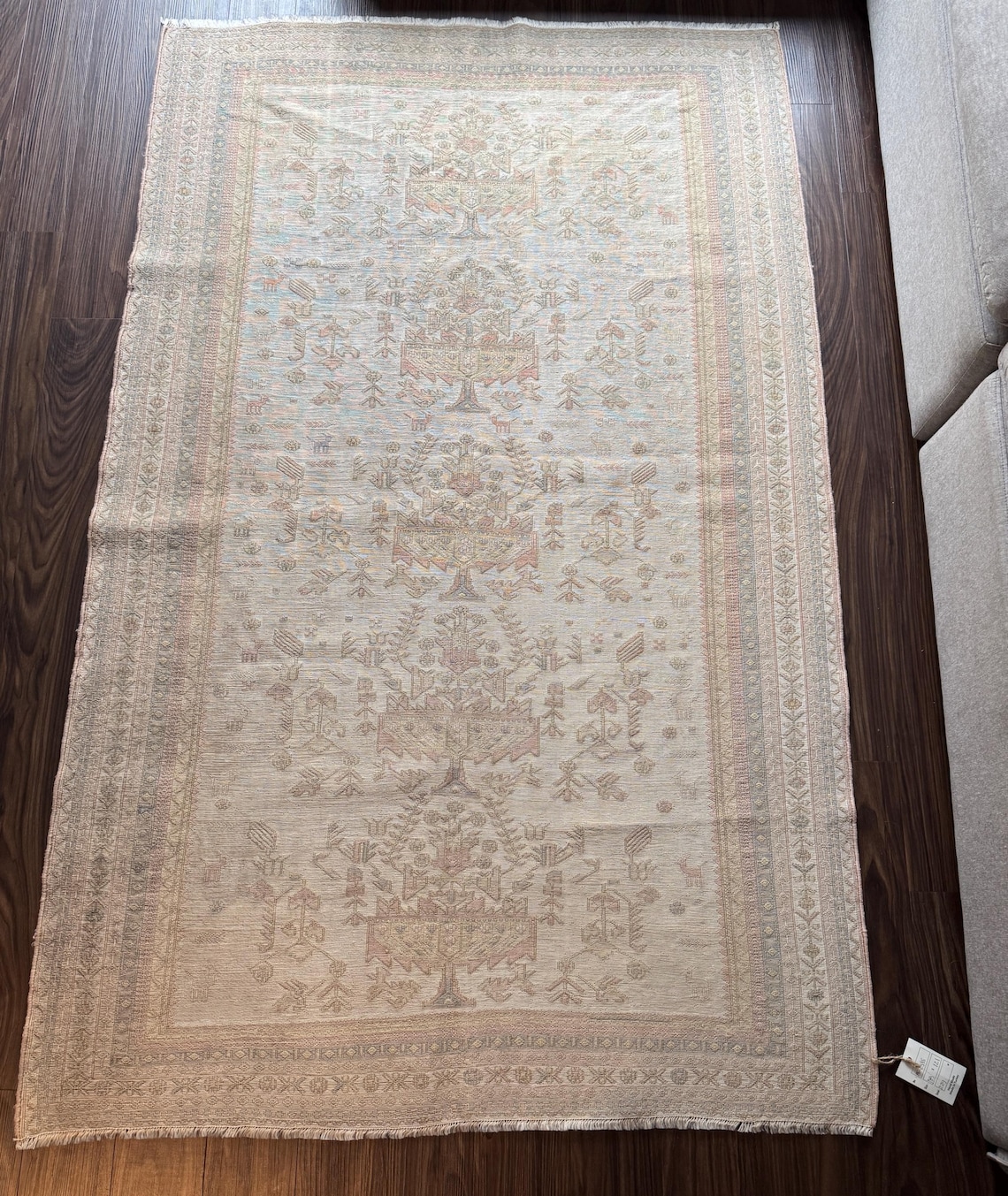
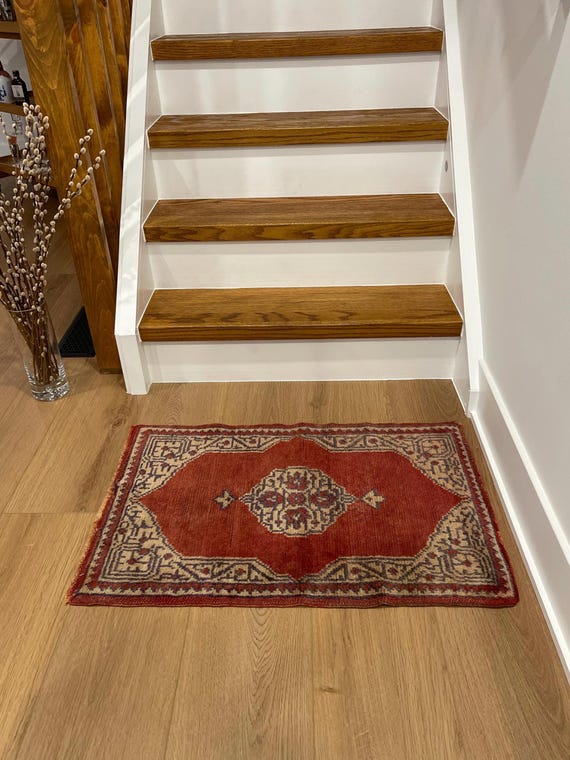
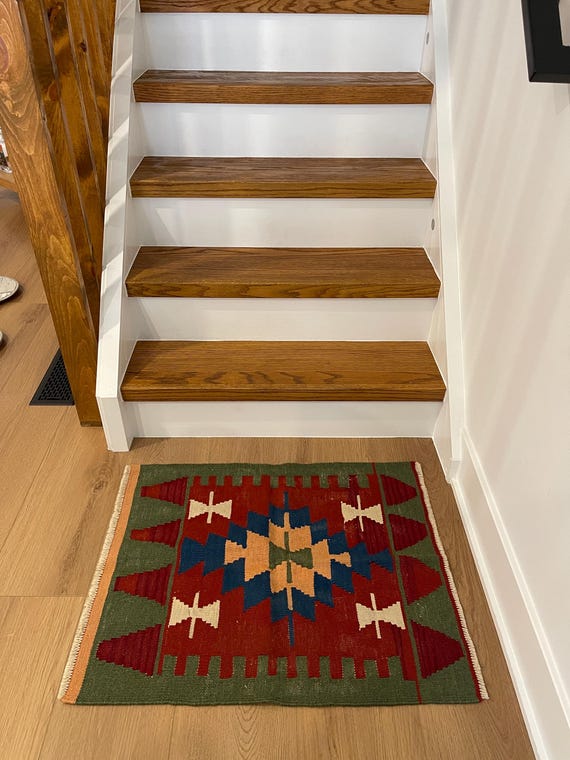
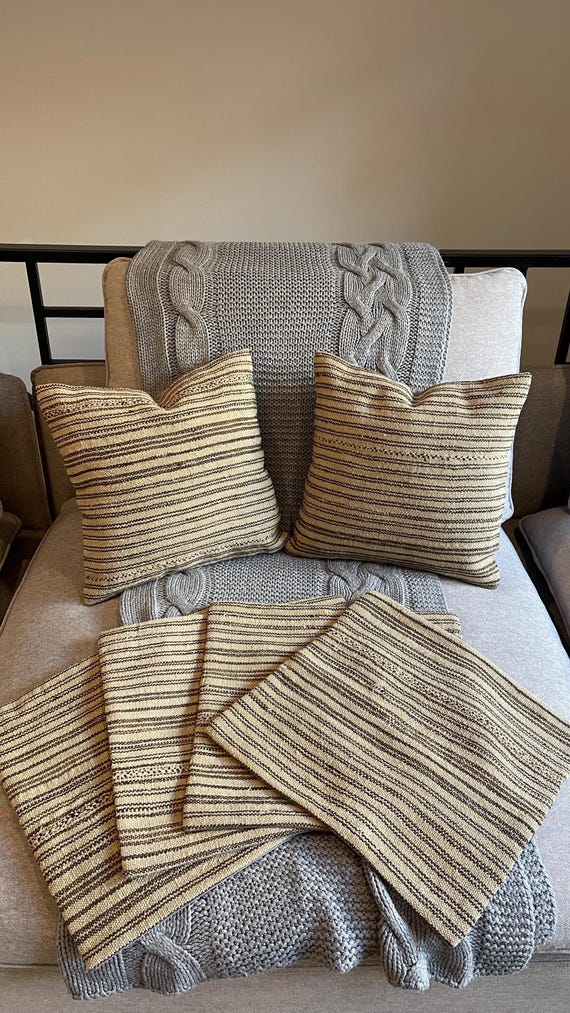
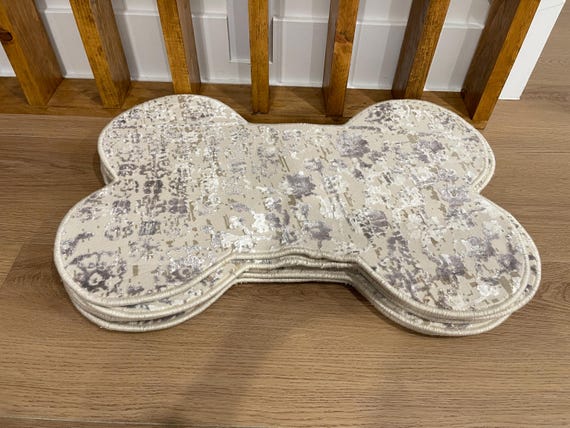
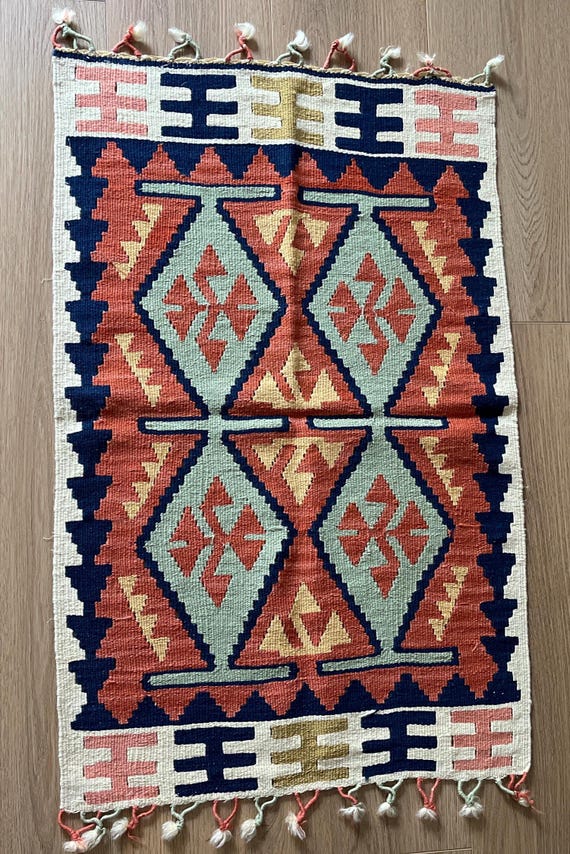
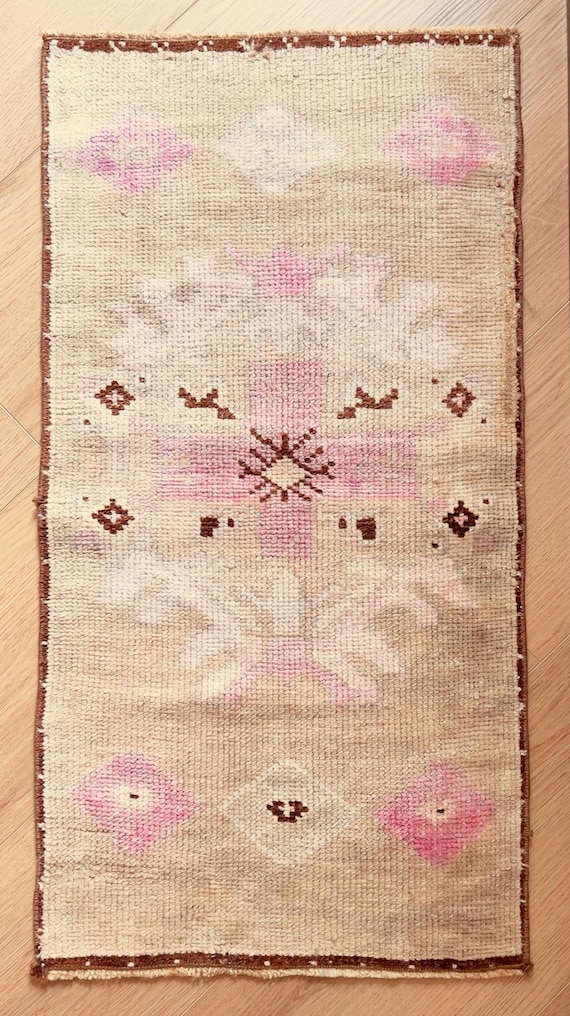
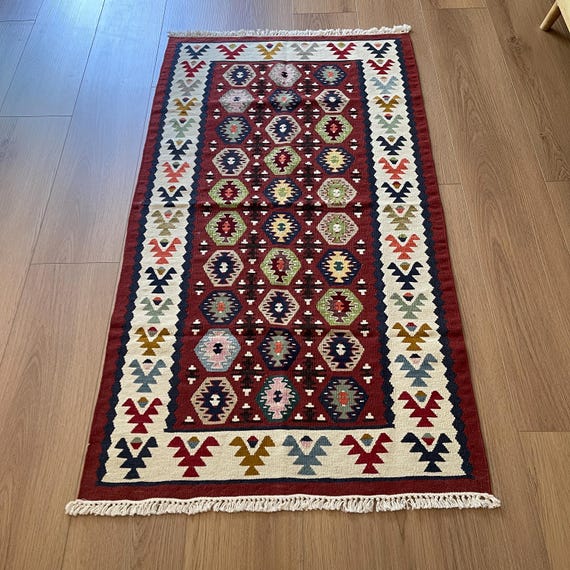
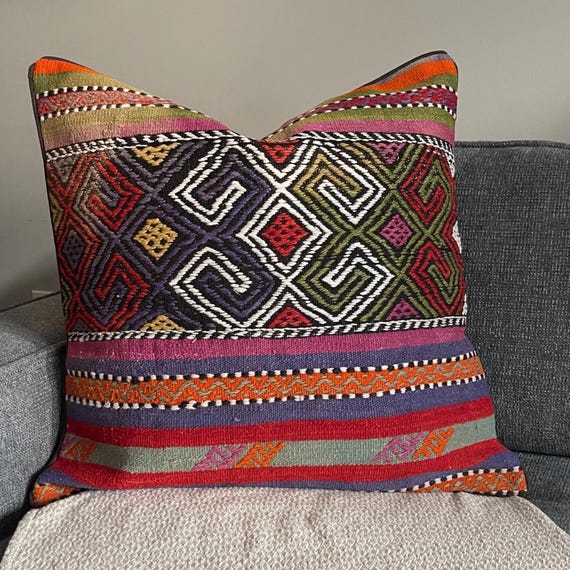
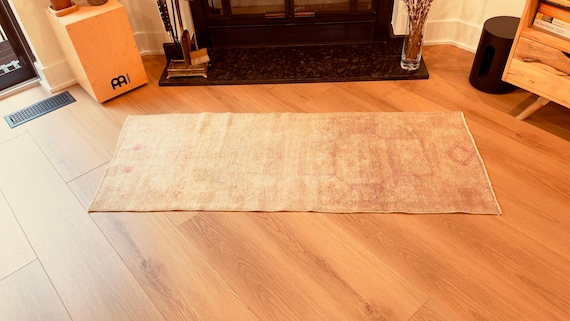
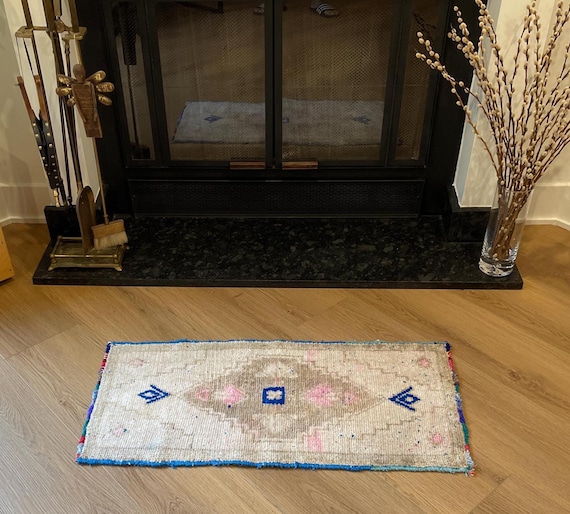
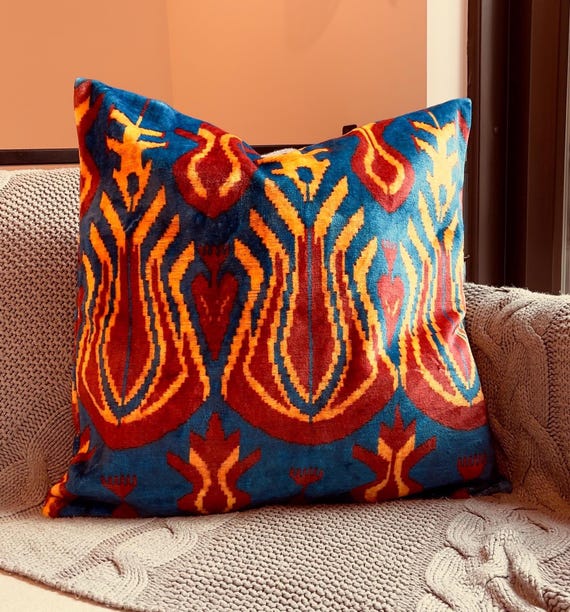
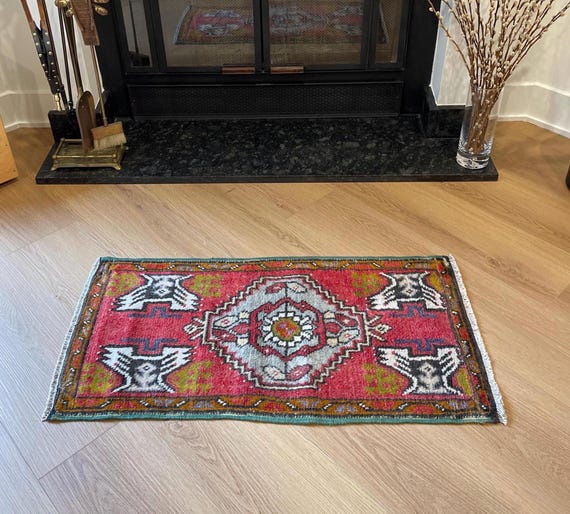
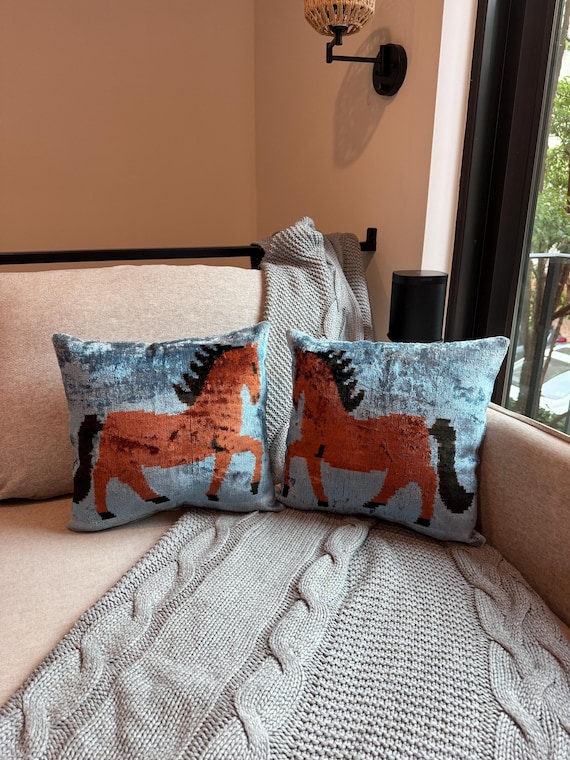
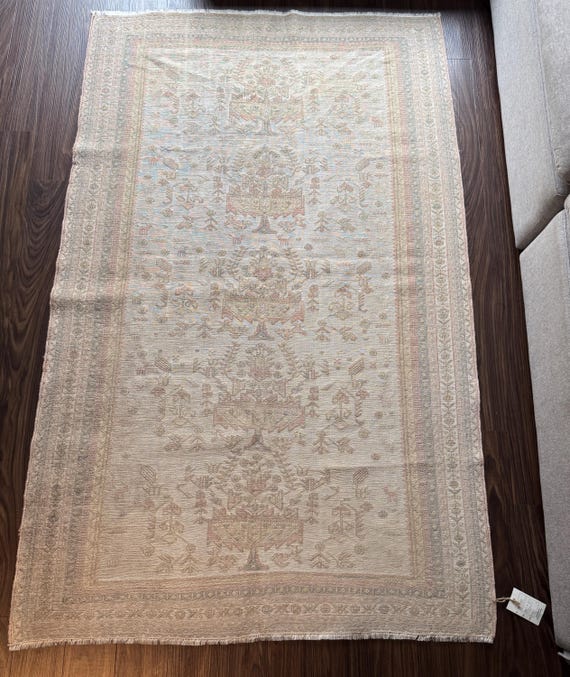
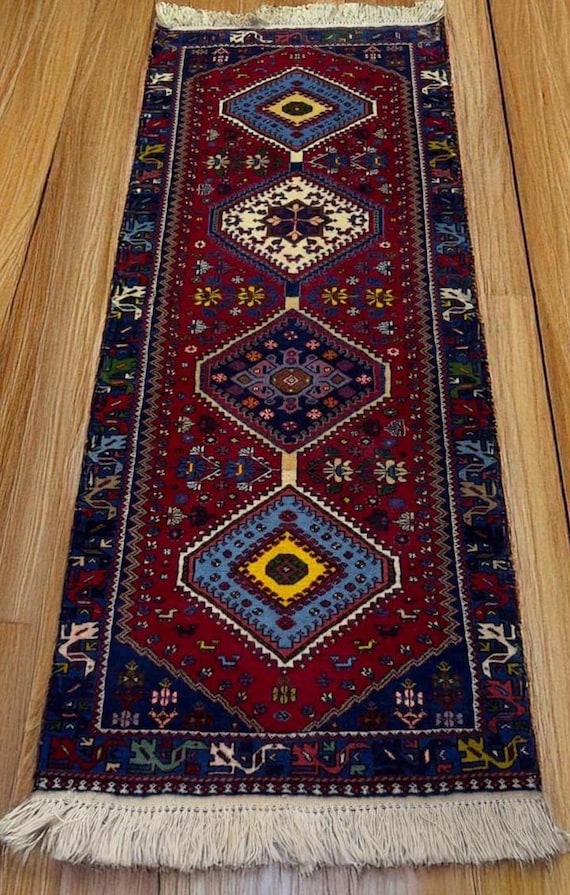
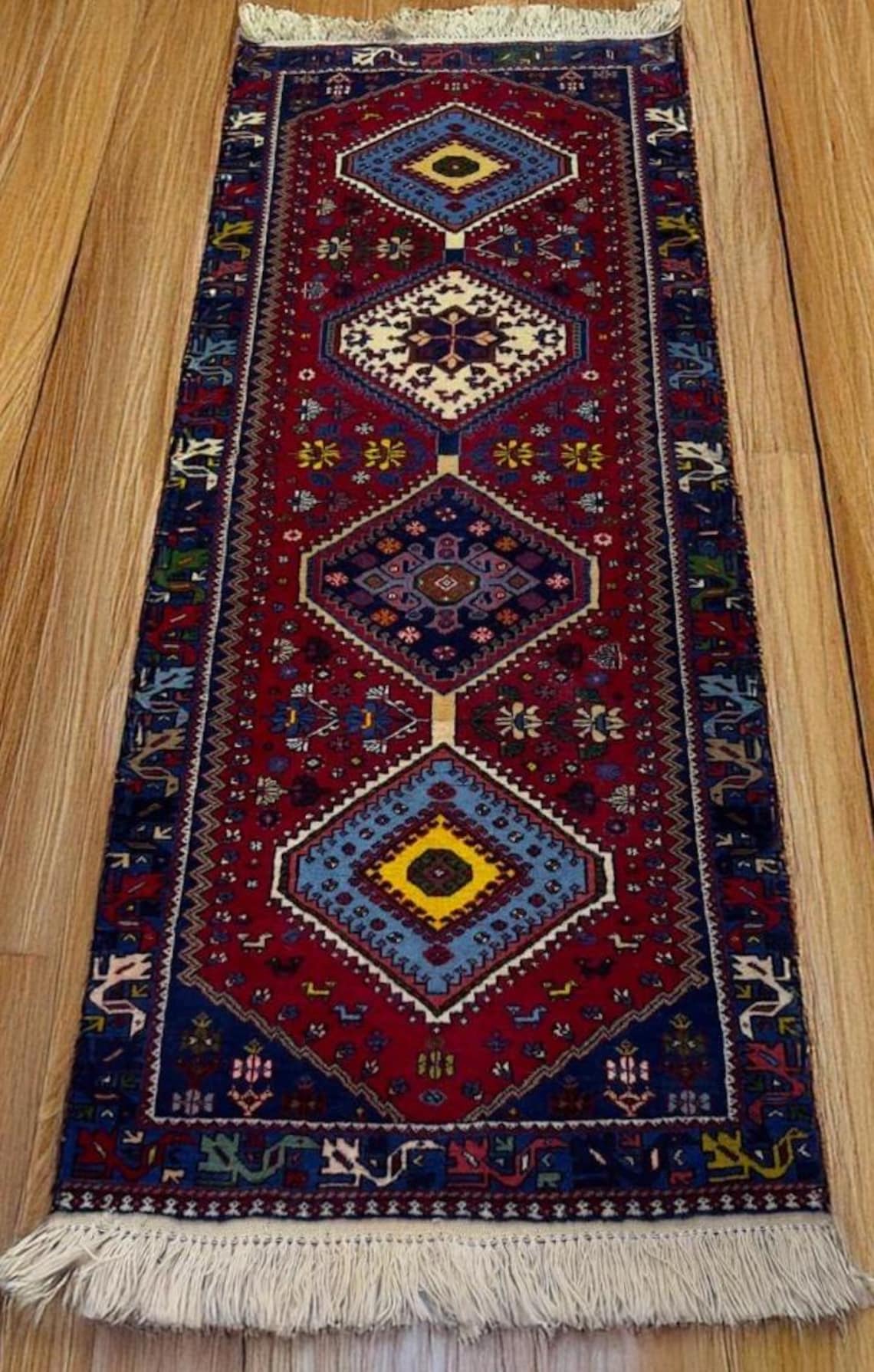
Floor pieces, sourced whole. Hand-spun wool on hand-loomed foundations, dyed with plants and minerals, walked on for decades before they reached us — which is precisely why they look the way they do.
AnatoliaHand-spun woolNatural dyesFree US shipping
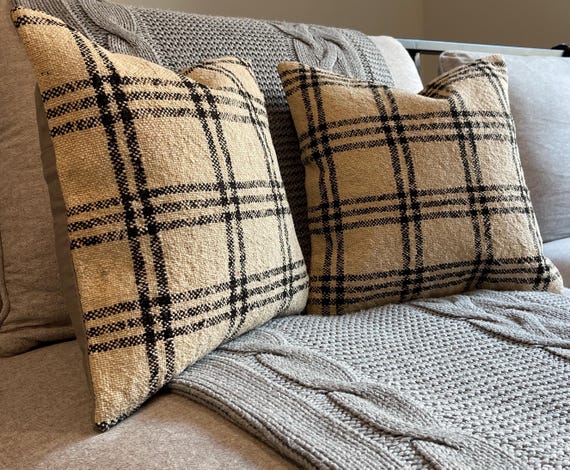
Every rug above is pulled automatically from our Etsy shop and kept in sync daily. Checkout and shipping are handled by Etsy.
The Detail
About Turkish rugs and kilims
Hand-spun wool is the whole story
Nearly everything people admire in an old Anatolian rug traces back to how the yarn was made. Hand-spun wool is uneven — the thickness wanders slightly along its length, and the twist varies with the spinner's hand. When that yarn meets a dye bath, the thicker sections take up less pigment than the thin, so a single strand emerges faintly banded.
Woven across a rug, thousands of those small inconsistencies produce abrash: the horizontal striations of tone that make a vintage field shimmer rather than sit flat. Machine-spun yarn is perfectly regular and dyes perfectly evenly, which is why a reproduction can copy every motif and still look inert. Abrash cannot be faked convincingly, and it is the first thing we check.
Anatolian fleece helps too. Mountain sheep grow a long, lustrous, high-lanolin fleece that takes dye deeply and resists soiling. It is also what gives a well-used rug its slight sheen underfoot after years of wear.
Madder, indigo and oak gall soften with age rather than greying — the reason an old field sits so easily in a room.
Natural dyes and how they age
The traditional palette came from what grew nearby: madder root for the reds through to rust, indigo for blues, weld and vine leaf for yellows, oak gall and iron for the darks. Greens were usually two baths — indigo over yellow — which is why the yellow sometimes wears away first and leaves a green that has drifted towards blue.
Natural dyes age by softening. Synthetics, introduced to the region in the late nineteenth century, tend instead to grey out or go muddy. A rug whose colours have mellowed into relation with one another has almost always been naturally dyed, and it is the reason a hundred-year-old piece so often sits more comfortably in a room than a new one.
Sumak, flatweave, and pile — three different things
These terms get used loosely, and the differences are worth knowing before you buy.
Flatweave (kilim)
No knots. The weft is beaten down over and under the warp, giving a thin, reversible textile with the pattern identical on both faces. Light, packable, easy under a door, and the most affordable way into a genuine handmade rug. Less insulating and less forgiving underfoot than pile.
Sumak
A brocaded flatweave: supplementary weft yarns are wrapped around the warps rather than simply passed through, building a raised, slightly herringboned surface with long floats visible on the reverse. Sumak is heavier and denser than plain kilim, holds fine detail better, and wears exceptionally well — it is the technique behind most of the sturdiest tribal flatweaves. It is not reversible in the way a kilim is, since the loose float ends sit on the back.
Pile
Individually knotted and trimmed, producing the plush surface most people picture. Turkish pile uses the symmetrical Gördes knot, looped around two warps. Warmer, quieter and softer underfoot, but thicker and considerably heavier.
One clarification, since the name comes up constantly in rug listings: Yalameh rugs are Persian rather than Anatolian — a tribal pile weave known for bold medallions on hand-spun wool. They are frequently sold alongside Turkish pieces and are easily confused with them. We will say so plainly when a piece is Persian rather than Turkish; the two traditions are related but not interchangeable.
Vintage rugs come in loom sizes, not showroom sizes. Measure the room and work to the figures in each listing.
Sizing a rug to a room
The most common mistake is buying too small. A rug that floats in the middle of a floor with everything sitting off it makes a room read smaller, not larger.
Room
What generally works
Living room
At minimum the front legs of every seat on the rug. All legs on is better if the floor allows.
Under a dining table
Add roughly 24″ beyond the table on all sides, so chairs stay on the rug when pulled out.
Bedroom
Either extending 18–24″ past the sides and foot of the bed, or a pair of runners either side.
Hallway / kitchen
Runners — leave 4–6″ of bare floor at each side rather than filling the width.
Vintage rugs rarely come in tidy modern dimensions. They were woven to a loom and a household, not a showroom chart, so expect sizes like 6′2″ × 4′. Measure your space and work to the actual figures in each listing rather than to a nominal size.
Layering
Layering is the reliable answer when a piece you love is smaller than the room needs. Put a large, plain, low-texture base underneath — jute, sisal, flatweave in a single tone — and float the vintage rug on top, off-centre, anchored by furniture. The base solves the coverage problem while the good piece stays the thing you actually look at.
Layering also lets you use a fragile or thin rug in a busier room than it could otherwise survive, since the base takes the structural load.
Care
Rotate 180° once or twice a year so wear and sun exposure distribute evenly.
Use a rug pad. It prevents slipping, cushions the foundation against grinding grit, and materially extends the life of a flatweave.
Vacuum without a beater bar. On a flatweave or Sumak, use suction only — a rotating brush will pull the floats.
Blot spills immediately, working inward from the edge. Cold water, wool-safe soap, no enzyme cleaners.
Shake or beat outdoors rather than deep-cleaning. Most household dirt in an old rug is grit, not stain.
Keep away from sustained direct sun, and address moths early — wool in a dark, undisturbed corner is exactly what they want.
For a full wash, use a specialist hand-washer, not a general carpet-cleaning service.
Floor pieces move quickly and our shelf is deliberately small — we buy what we would put in our own house rather than filling a catalogue. If nothing below fits your room, tell us what you are after and we start hunting straight away. Trade and volume enquiries go through trade and wholesale.