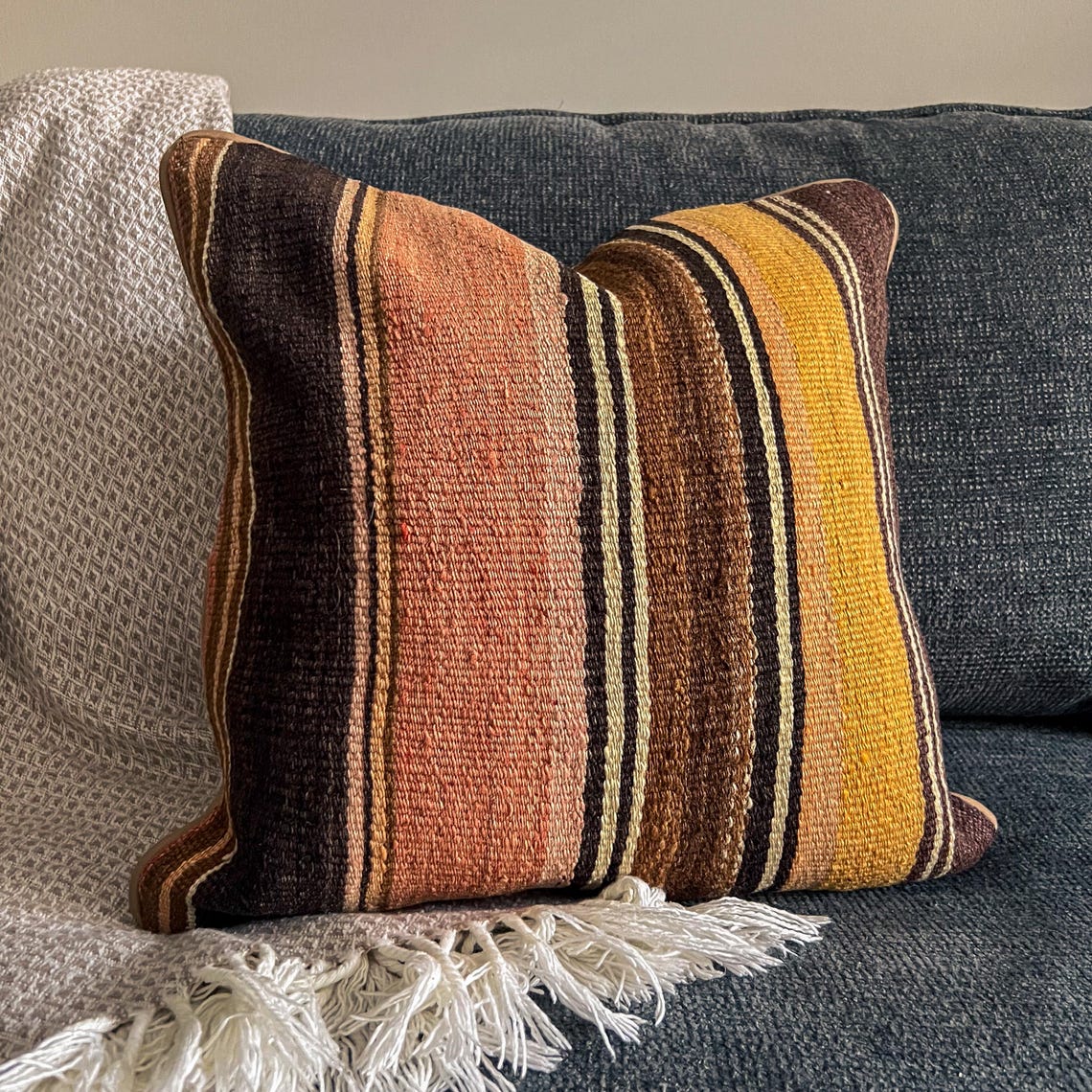
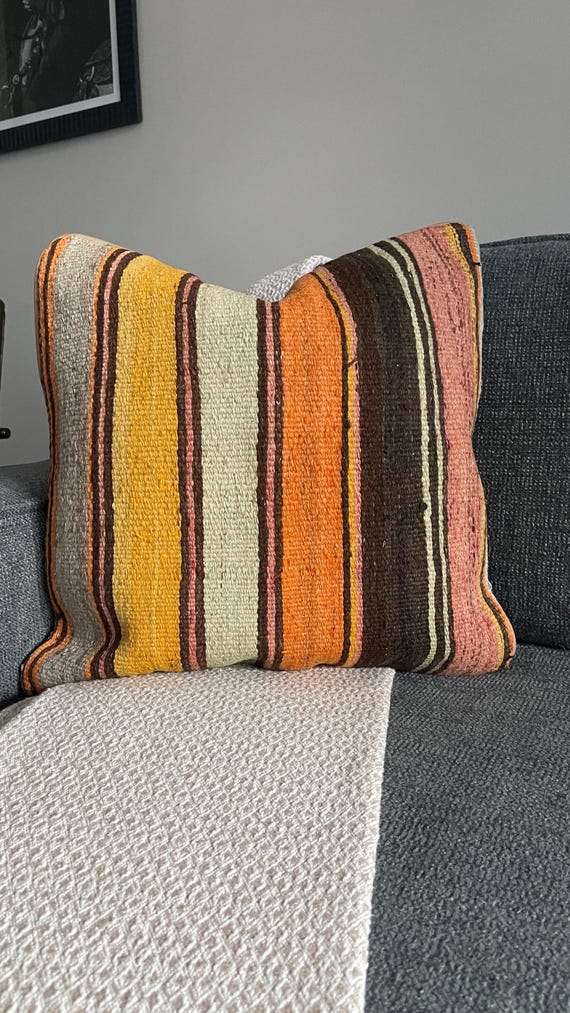
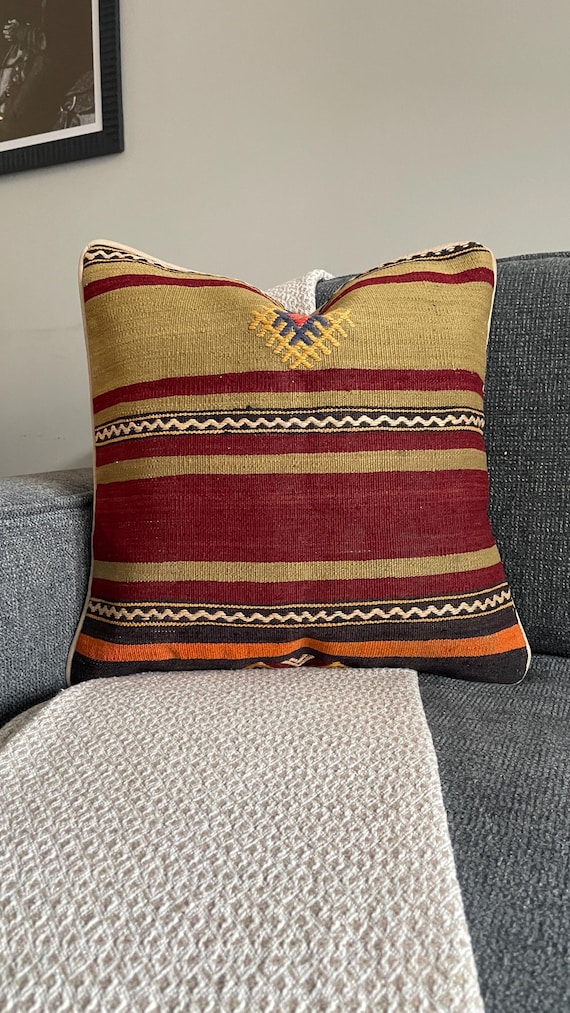
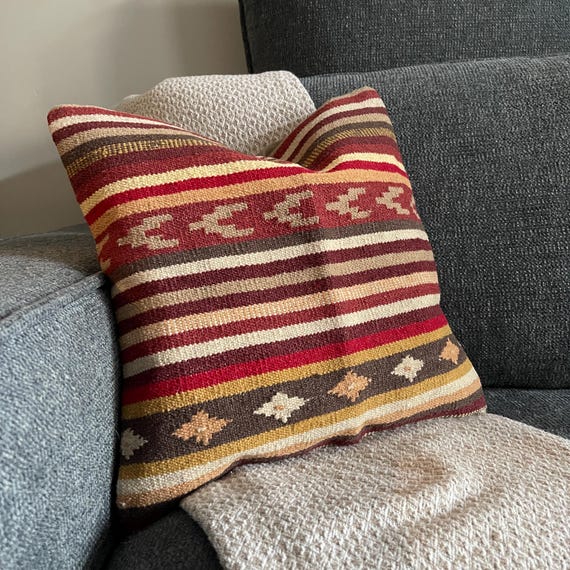
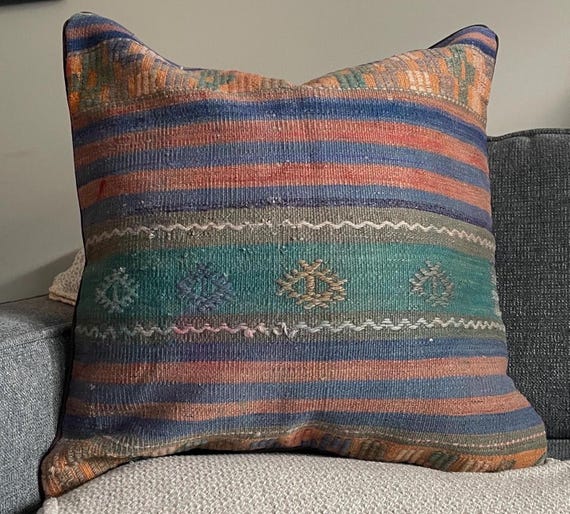
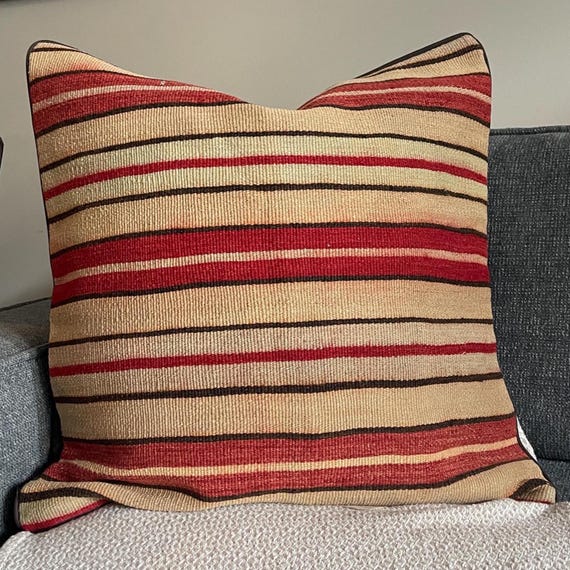
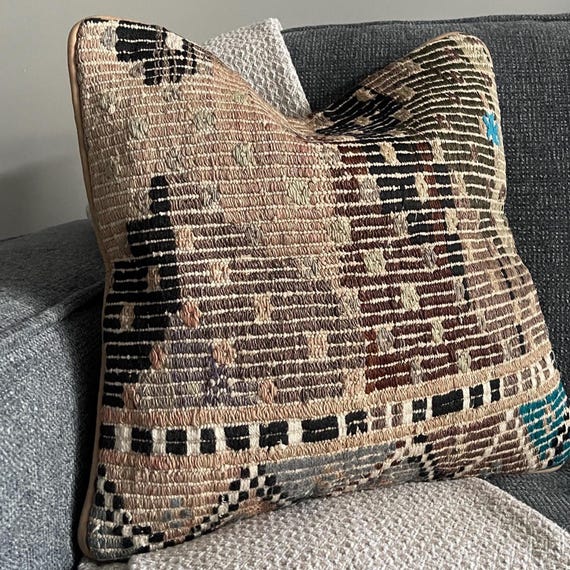
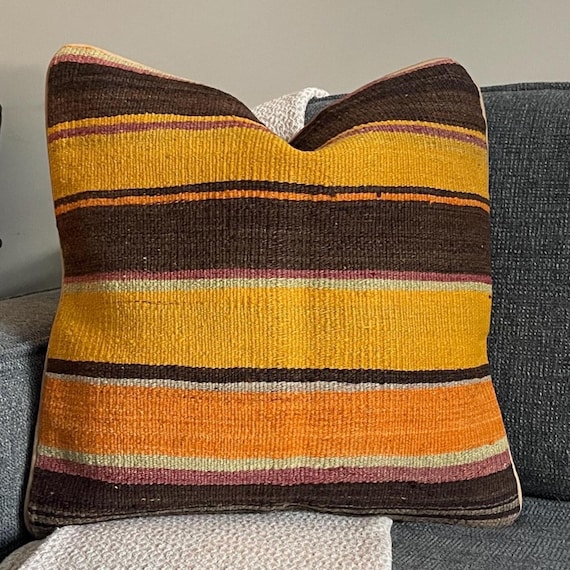
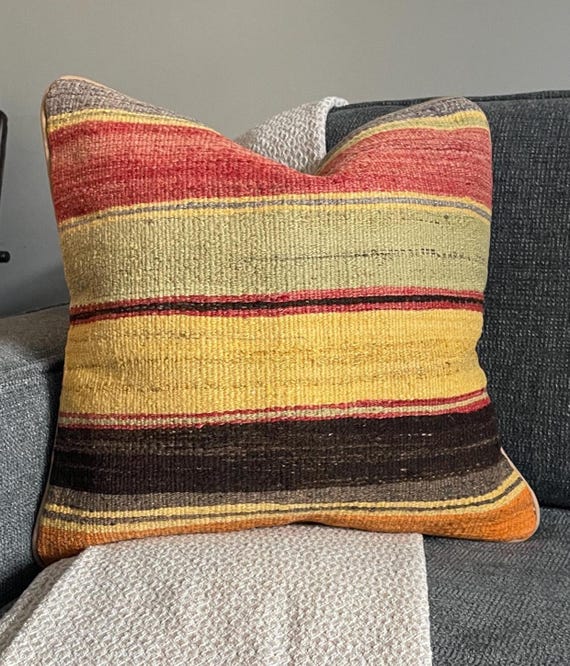
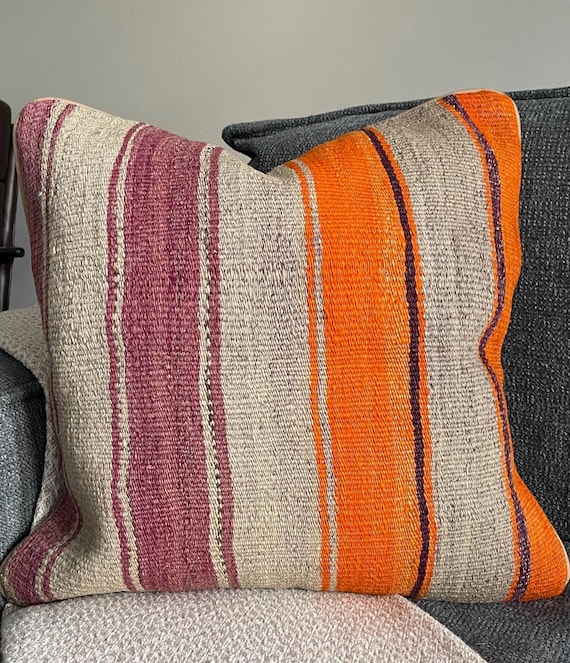
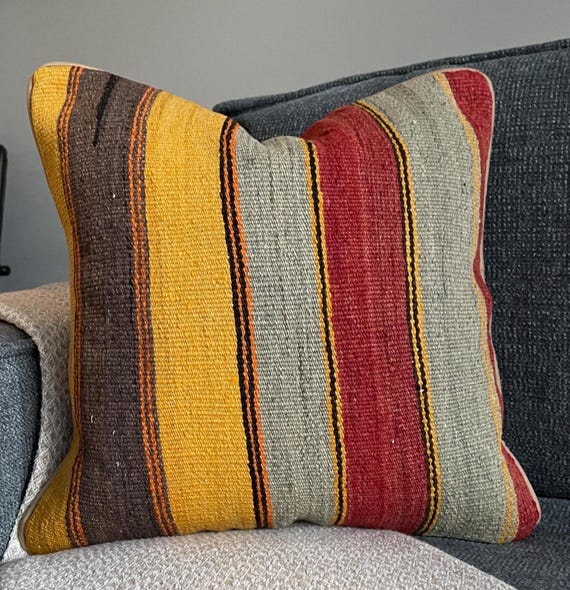
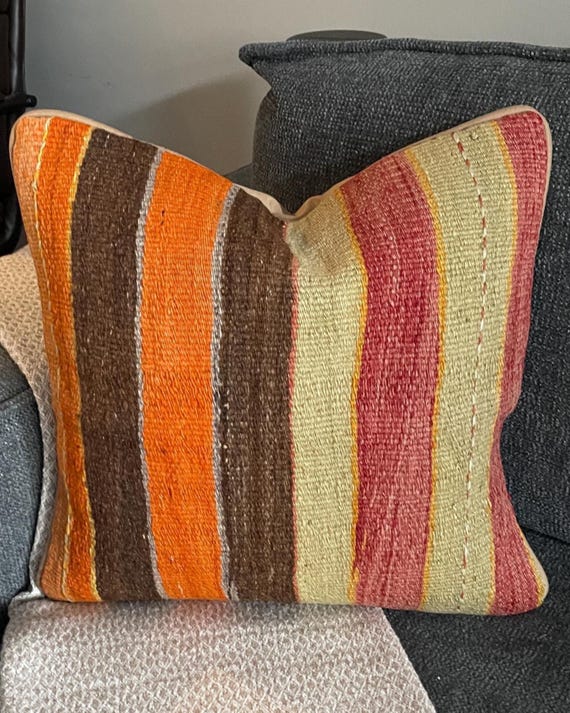
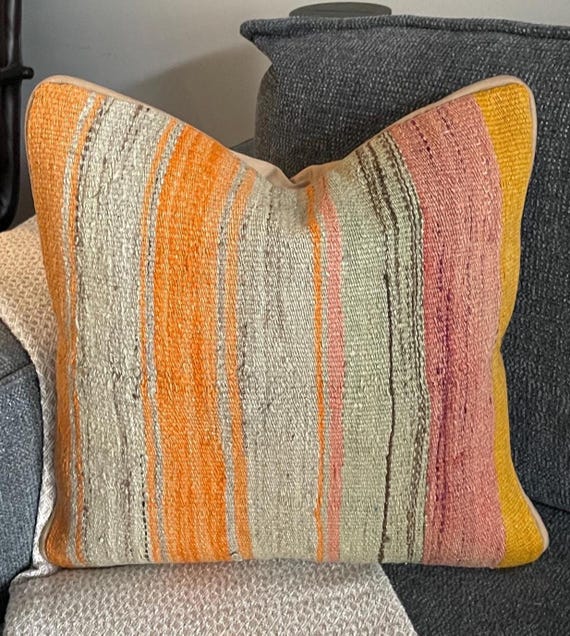
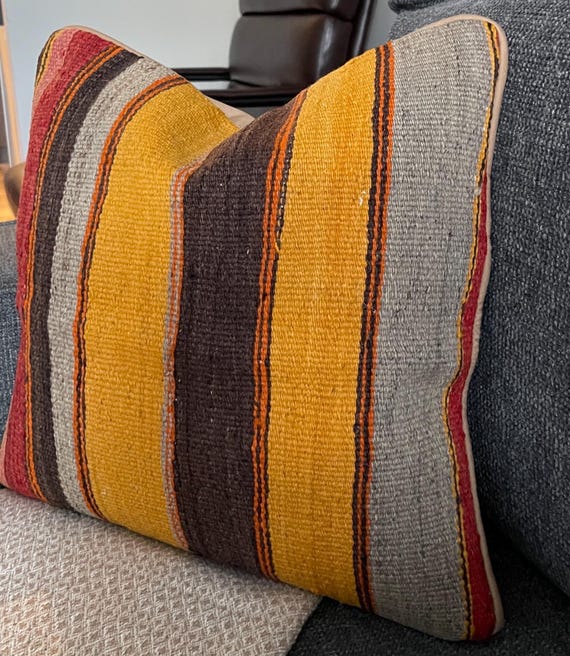
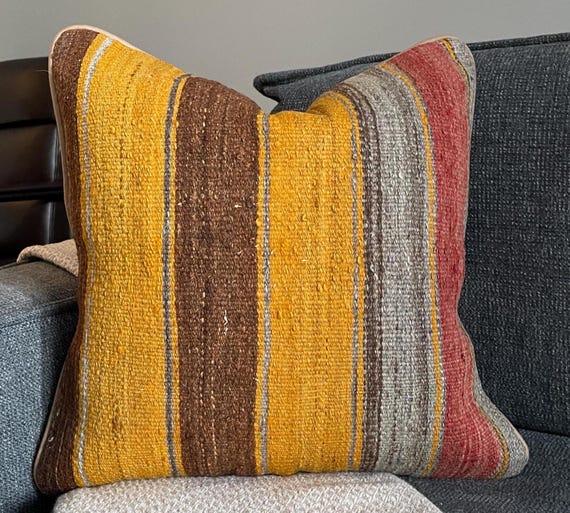
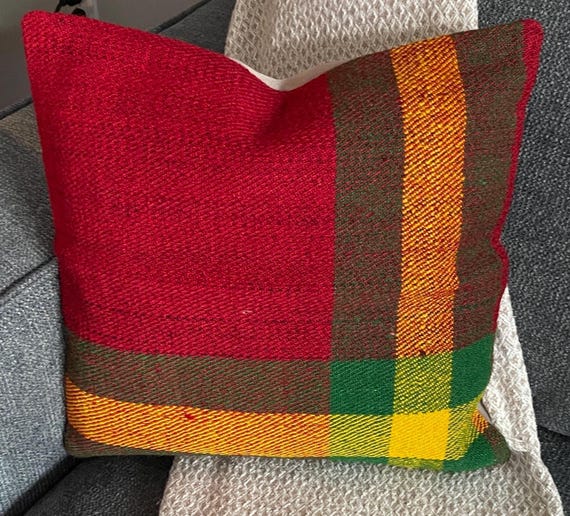
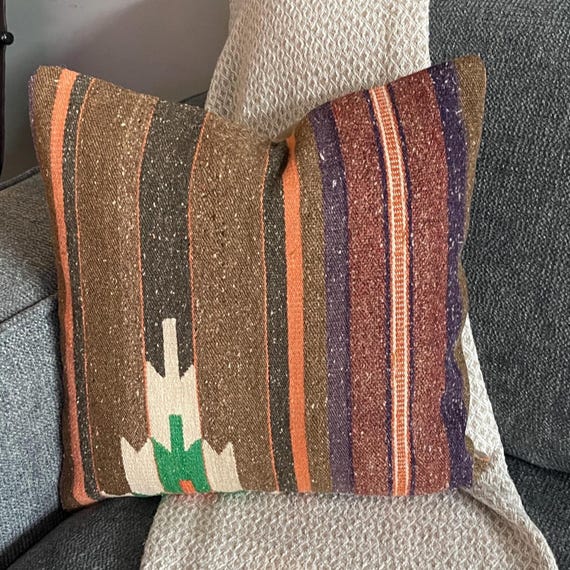
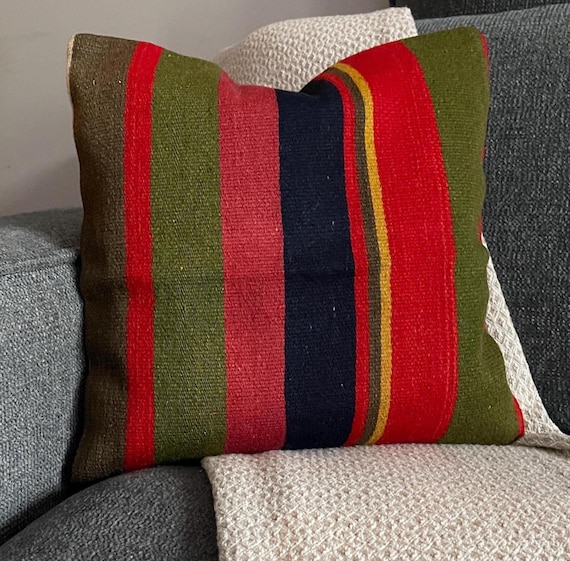
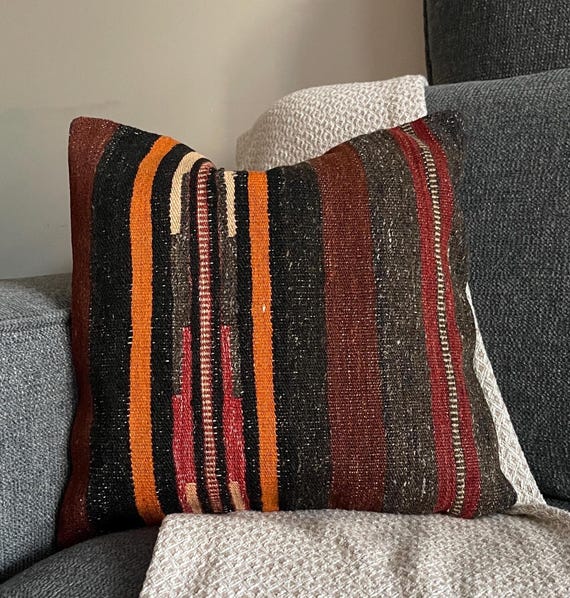
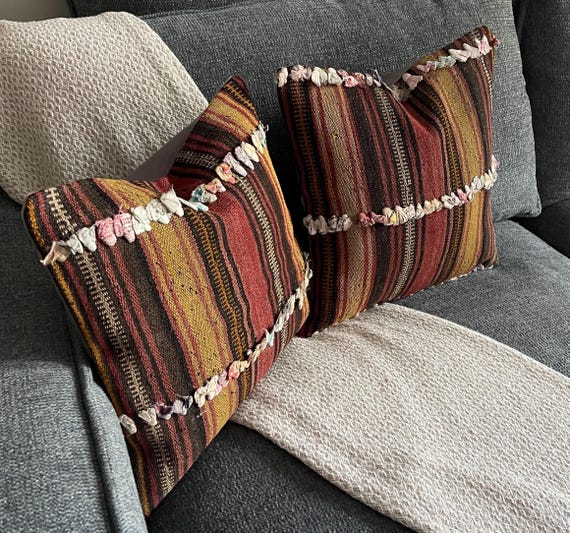
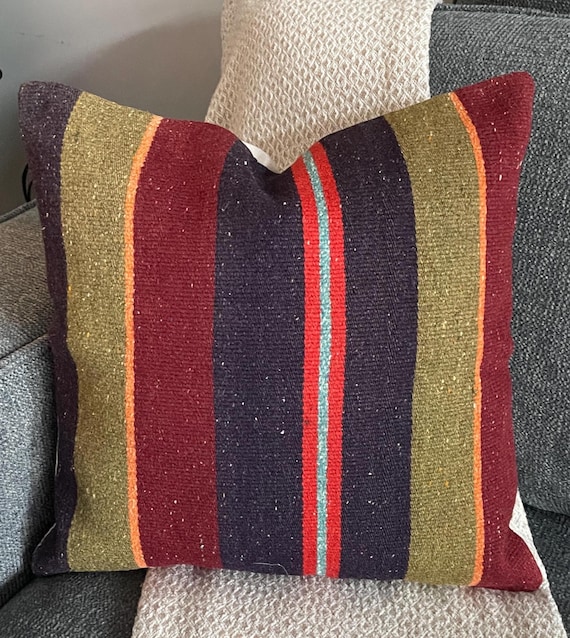
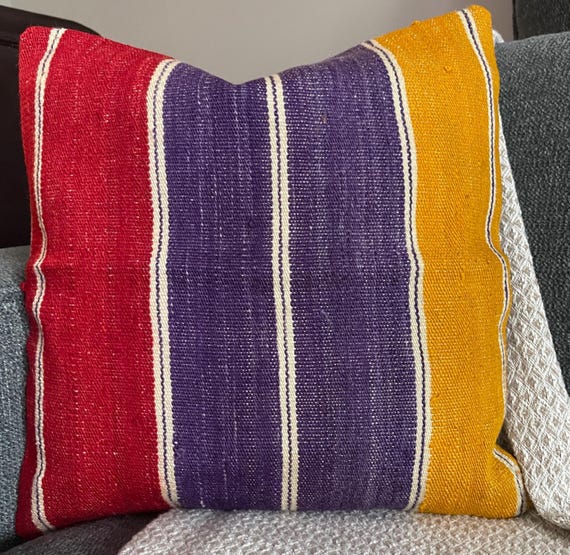
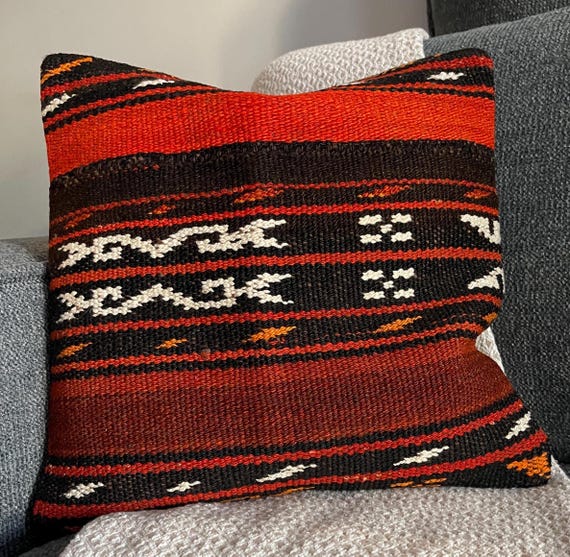
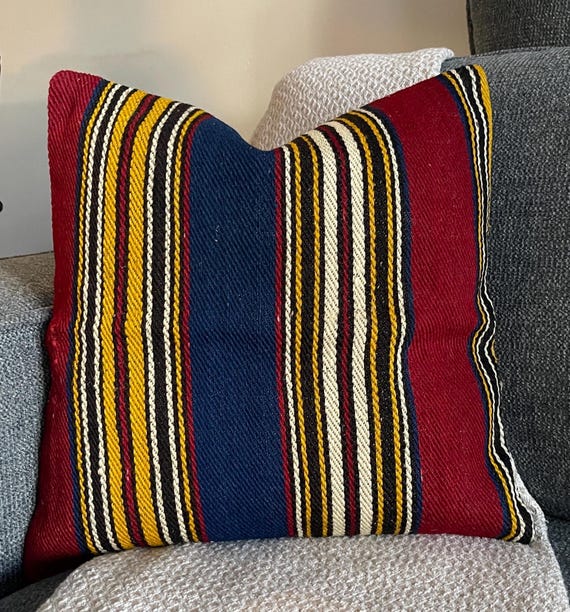
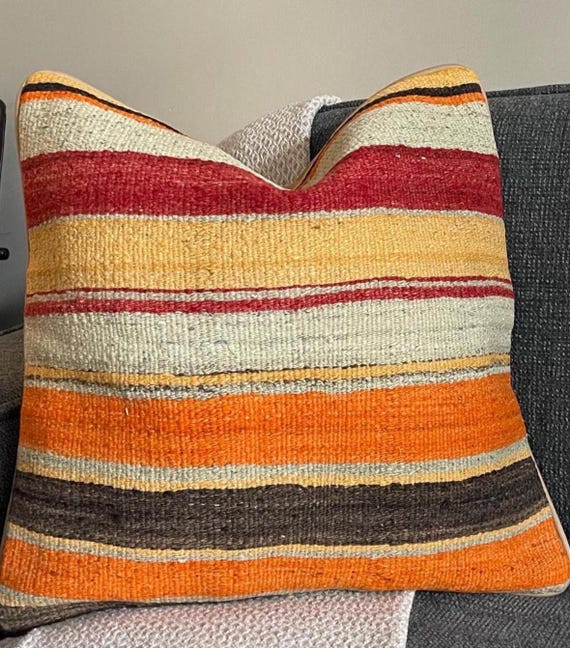
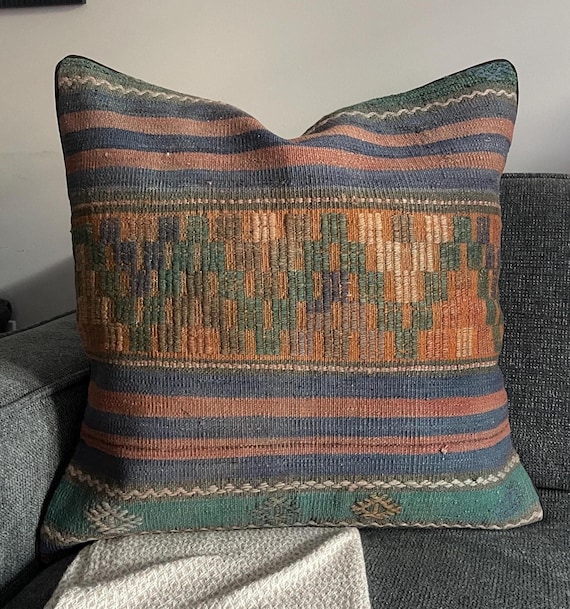
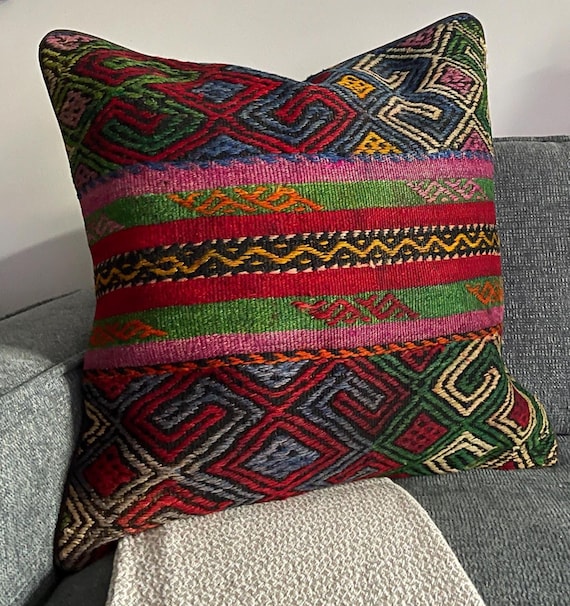
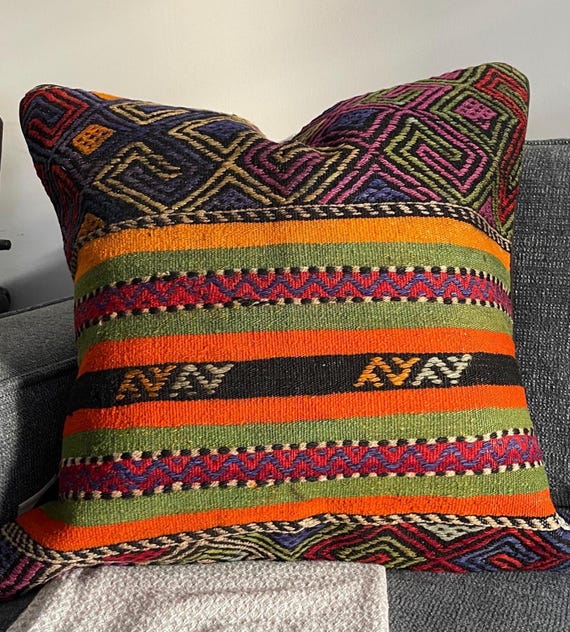
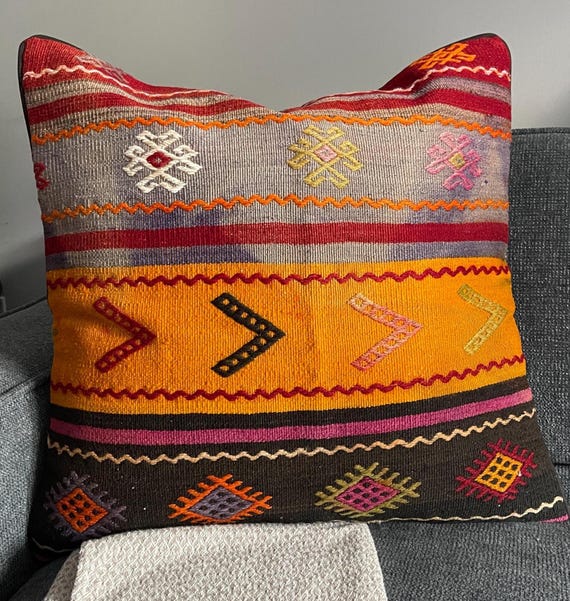
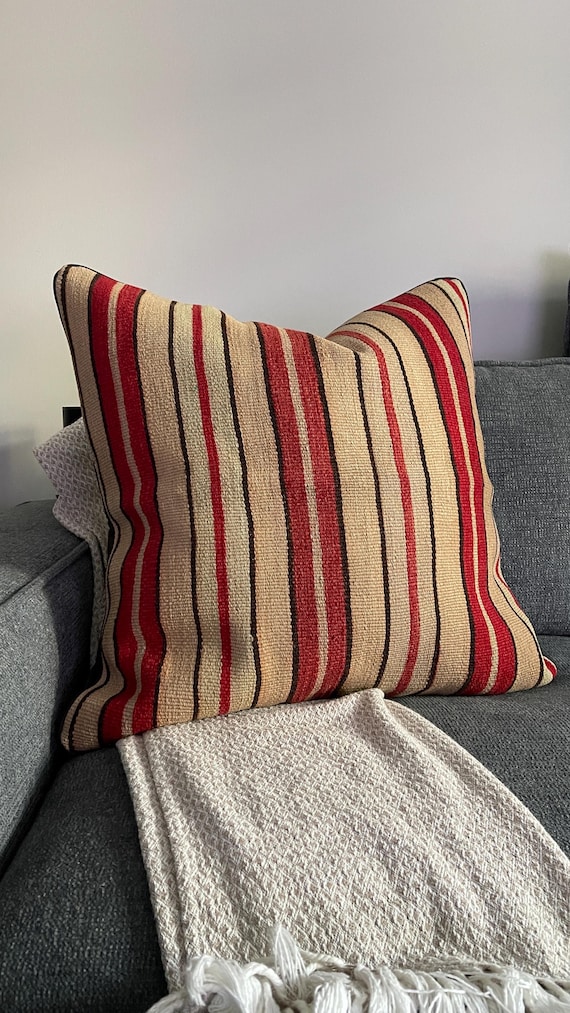
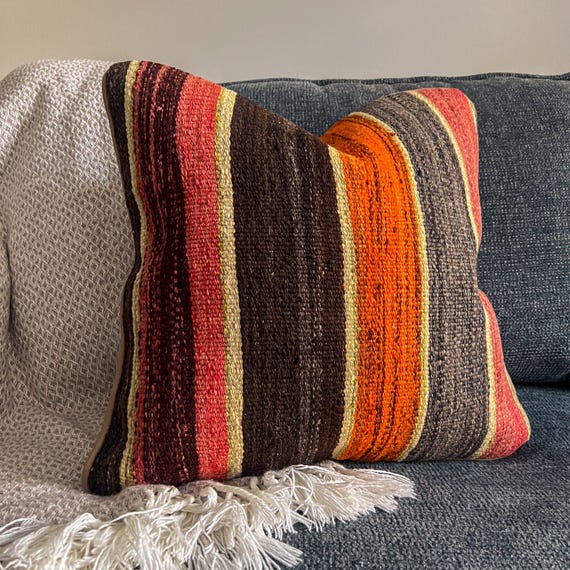
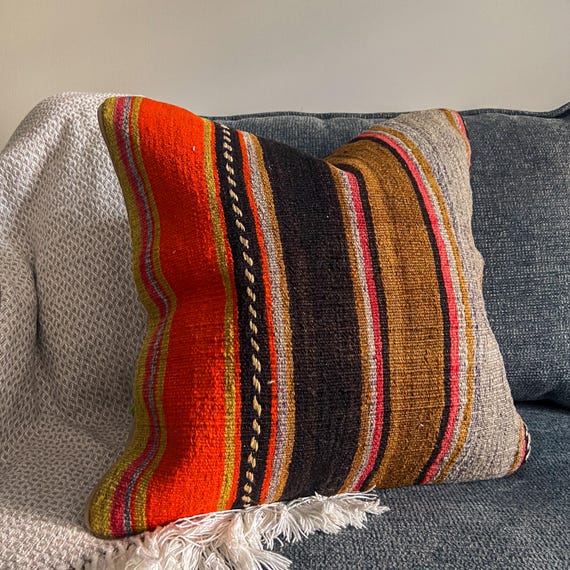
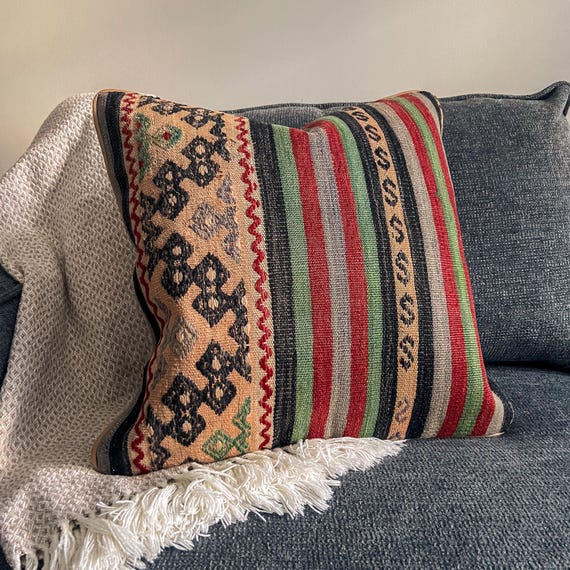
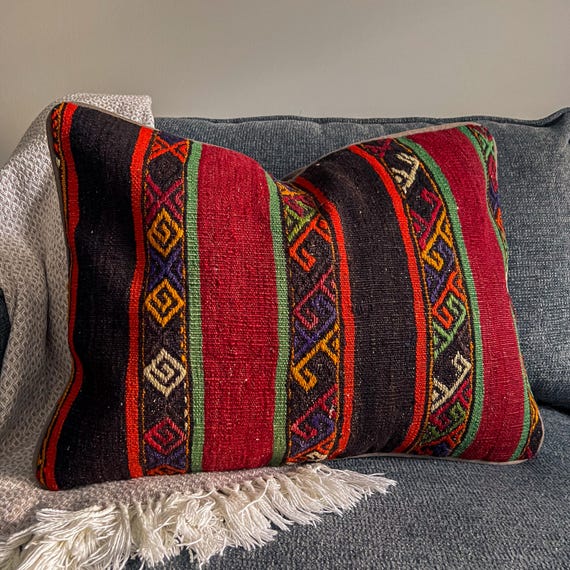
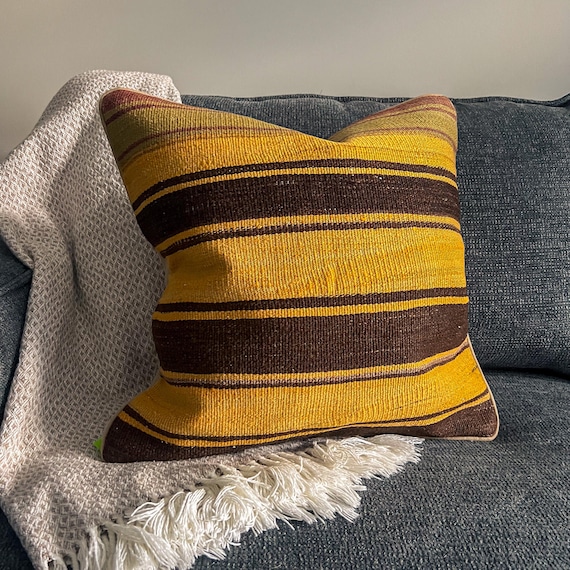
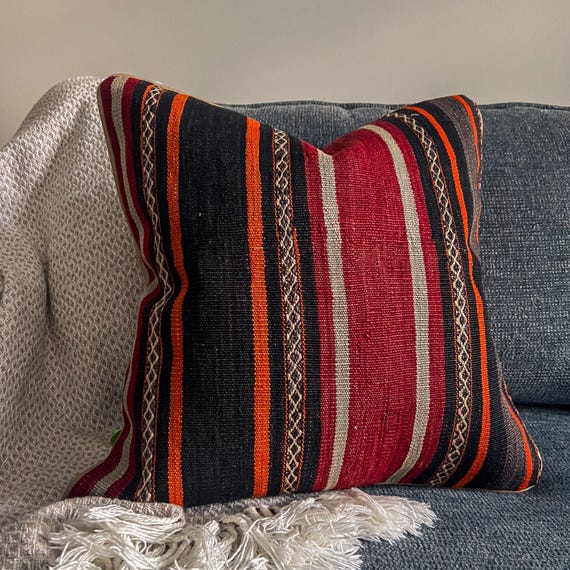
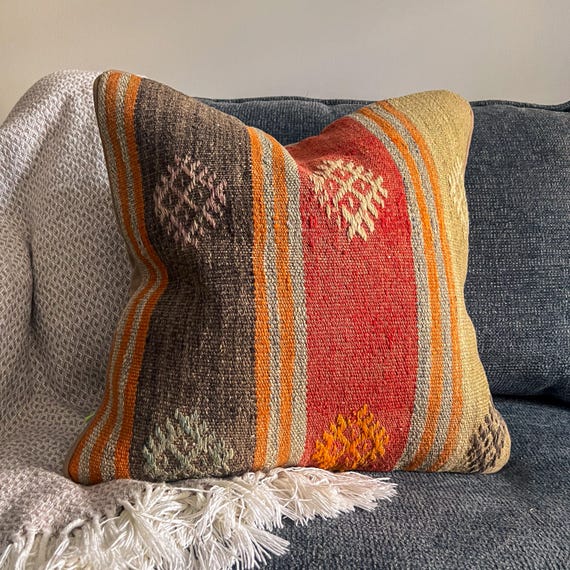
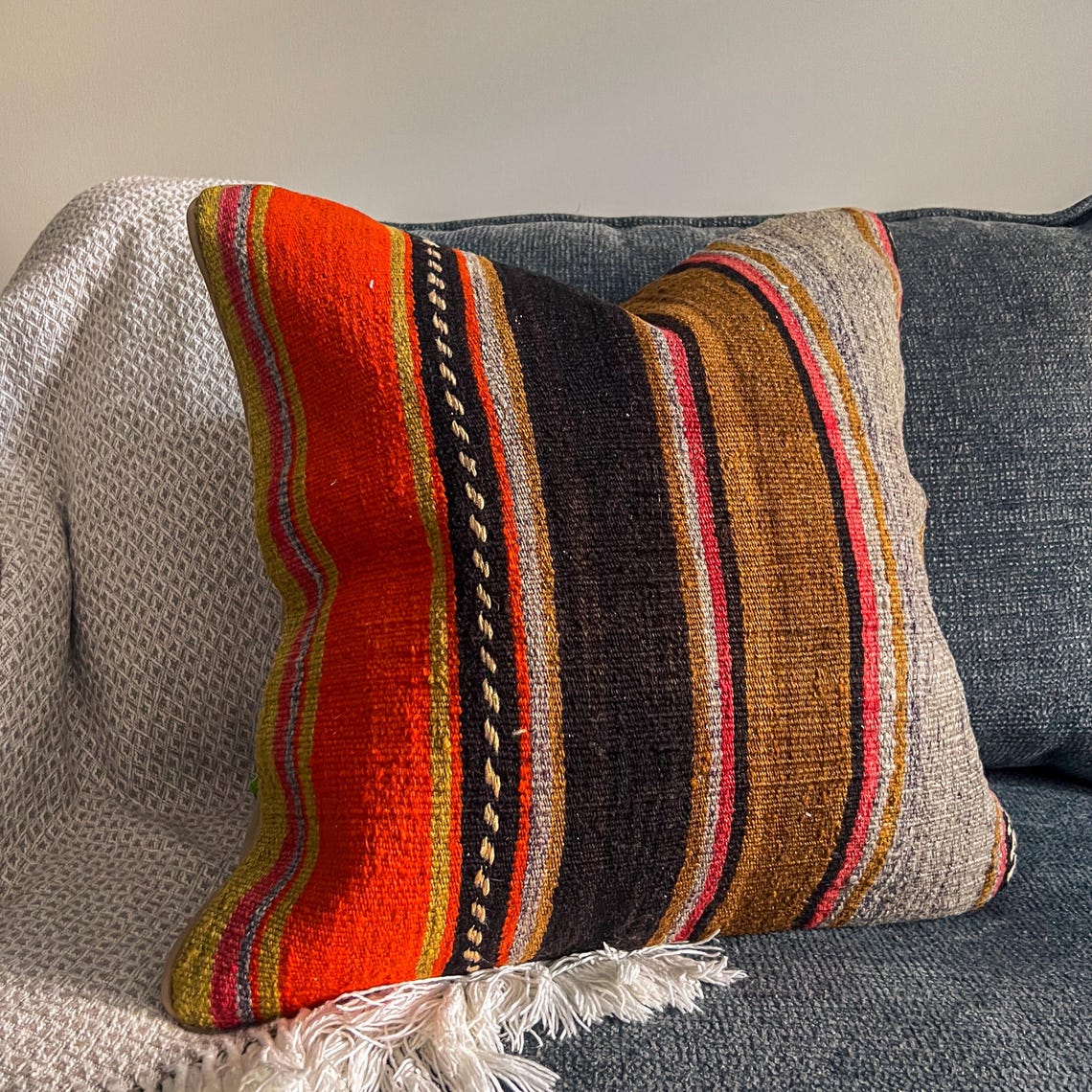
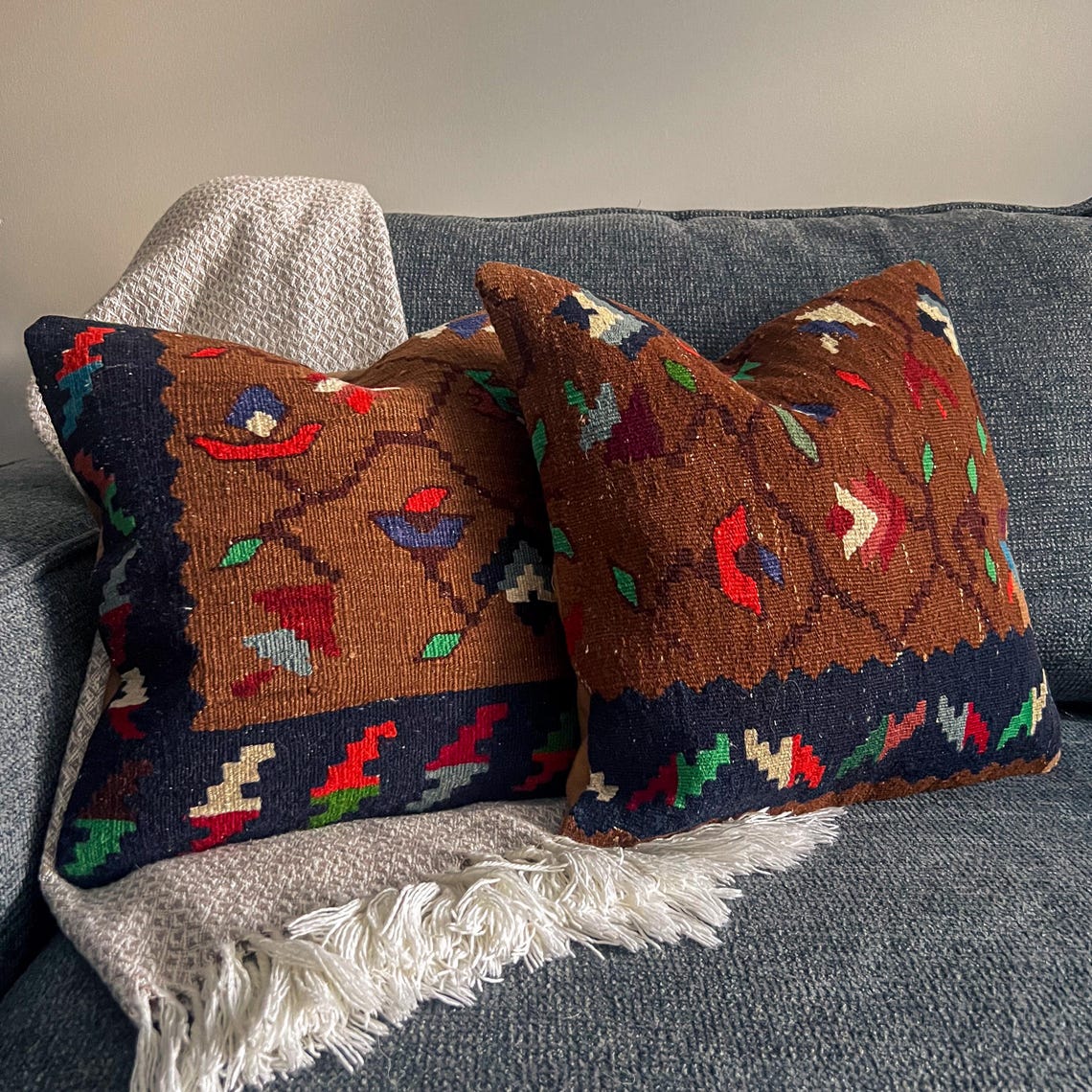
Cut from Anatolian flatweaves that spent decades as floor rugs, grain sacks and tent dividers before we found them. The wear is real, the wool is hand-spun, and the geometry was never drawn on paper.
Every kilim cover above is pulled automatically from our Etsy shop and kept in sync daily. Checkout and shipping are handled by Etsy.
The Detail
About kilim pillow covers
Flatweave, not pile — and why it matters here
A kilim is woven, not knotted. In a pile rug, short lengths of yarn are tied around the warp and trimmed, building the plush surface most people picture when they hear "Turkish rug." A kilim has no such surface. The weft passes over and under the warp and is beaten down hard, so the pattern is the structure — identical on both faces, thin, dense, and closer to a tapestry than to a carpet.
For a pillow this is exactly the right construction. There is no nap to crush flat where you lean, no shedding, and no direction the piece has to face. A flatweave takes a corner crease and releases it. It also means the design has no margin for revision: the weaver commits to each colour block as the weft goes in, with no way back.
Look closely at the joins between colours and you will often see a row of small vertical slits — slit-weave, where two colour areas turn back on their own warps rather than interlocking. It is a structural signature of the technique, not damage.
Geometry worked from memory rather than a drafted pattern — which is why the arithmetic drifts at the borders.
Anatolian weaving, and what the patterns carried
These were domestic textiles from village and nomadic households across Anatolia, woven by women on narrow portable looms, for use rather than sale. Motifs travelled by memory down family lines and stayed regionally legible: the elibelinde, a stylised figure with hands on hips, standing for motherhood; the ram's horn for strength; hooked diamonds understood as protection against the evil eye. A weaver in one valley could read another's cloth.
Because nothing was drafted in advance, the arithmetic drifts. A border will run out of room and get compressed; a row of diamonds will be one short and get resolved with something improvised. Those corrections are the most reliable evidence of a hand loom, and the first thing missing from a machine copy.
Upcycled, which is the honest word for it
Every cover here began as a larger textile that had reached the end of its life in that form — worn thin in the centre, holed at a fold, or simply too damaged to sell whole. The sound sections get cut for pillows; the rest is not thrown away lightly.
There is a real environmental argument for this and we would rather state it plainly than dress it up. The wool was grown, spun and dyed decades ago. Reusing it costs no new fibre, no new dye bath, no new water. Set against a new synthetic cushion cover with a service life measured in a few years, an upcycled kilim panel that has already survived fifty is doing considerably better than most things sold as sustainable.
It also means you should expect character. Slight fading on one side, a small old repair, a seam where the weaver joined two loom widths — these are described, not concealed, in each listing.
Sizes
Kilim covers vary more than suzani because we cut around the sound areas of each rug rather than to a fixed template. Backs are cotton, closures are concealed zips.
Size
Where it tends to land
16″ × 16″
Accent chairs, window seats, layering in front of larger pillows
18″ × 18″
The workhorse — sofas, beds, benches
20″ × 20″
Deep-seat sofas and sectionals
24″ × 18″
Lumbar — low daybeds, reading chairs, the centre of a bed
Size inserts an inch up from the cover for a filled shoulder. Wool has more body than silk, so a kilim cover holds its shape with a poly insert better than an embroidered one does.
Kilim reads as texture before it reads as pattern, which makes it far more forgiving than it looks.
Styling
Kilim reads as texture before it reads as pattern, which makes it far more forgiving than it looks. A lumbar against a leather chair, or two 18″ covers at the outer corners of a neutral sofa, will carry a room without dominating it.
Mixing kilims is mostly about scale: pair a large-motif piece with a small repeating one and let the palettes overlap in at least one colour. Where people go wrong is matching — four near-identical covers flatten the whole point of hand-weaving. If you want contrast in material rather than pattern, the silk embroidery on our suzani pillow covers page sits beautifully against wool, the sheen playing off the matte flatweave.
Working at floor level instead? The full-size flatweaves and hand-knotted pieces are on the Turkish rugs and kilims page.
Wool care
Vacuum on low suction with no beater bar, or shake outdoors — wool sheds grit readily.
Blot spills immediately with a dry cloth. Wool's natural lanolin repels liquid briefly, so speed does most of the work.
Cold water and a wool-safe soap for spot cleaning. Skip anything enzymatic or alkaline — both attack the protein fibre and can strip natural dye.
Never machine wash: an old flatweave will shrink unevenly along the warp and buckle permanently.
Dry flat and away from direct heat. Radiators make wool brittle.
An occasional airing outdoors on a dry day keeps stored pieces fresh without any cleaning at all.
Deciding between the two traditions? Our kilim vs suzani guide compares construction, origin and how each behaves in a room.
No two alike, and no restock
Because each cover comes from a specific rug, the run is however many sound panels that rug yielded — often one, sometimes three. When a listing sells there is no second one to cut. The grid below is our live Etsy inventory, refreshed daily, so what appears here is what genuinely remains.